
Architecture
at Zion Mennonite Church
Our church building was thoughtfully designed to reflect who we are and what we believe. Before choosing an architect, our congregation spent two years studying our history and faith, wanting our space to genuinely express our Anabaptist roots.
We partnered with Edward A. Sövik, an architect who took the time to deeply understand our beliefs. He respected our traditions while helping us imagine how they could be expressed in a fresh, meaningful way.
The result is a space shaped by two core ideas: that the church is a gathered community of believers, and that we follow Christ’s example of humility and service. You’ll notice simple lines, natural materials, and an atmosphere that feels open and welcoming. Our building is designed to serve — to be used, lived in, and filled with community.
It’s a space that quietly says: Come in. You’re welcome here.
The Cross at the Center
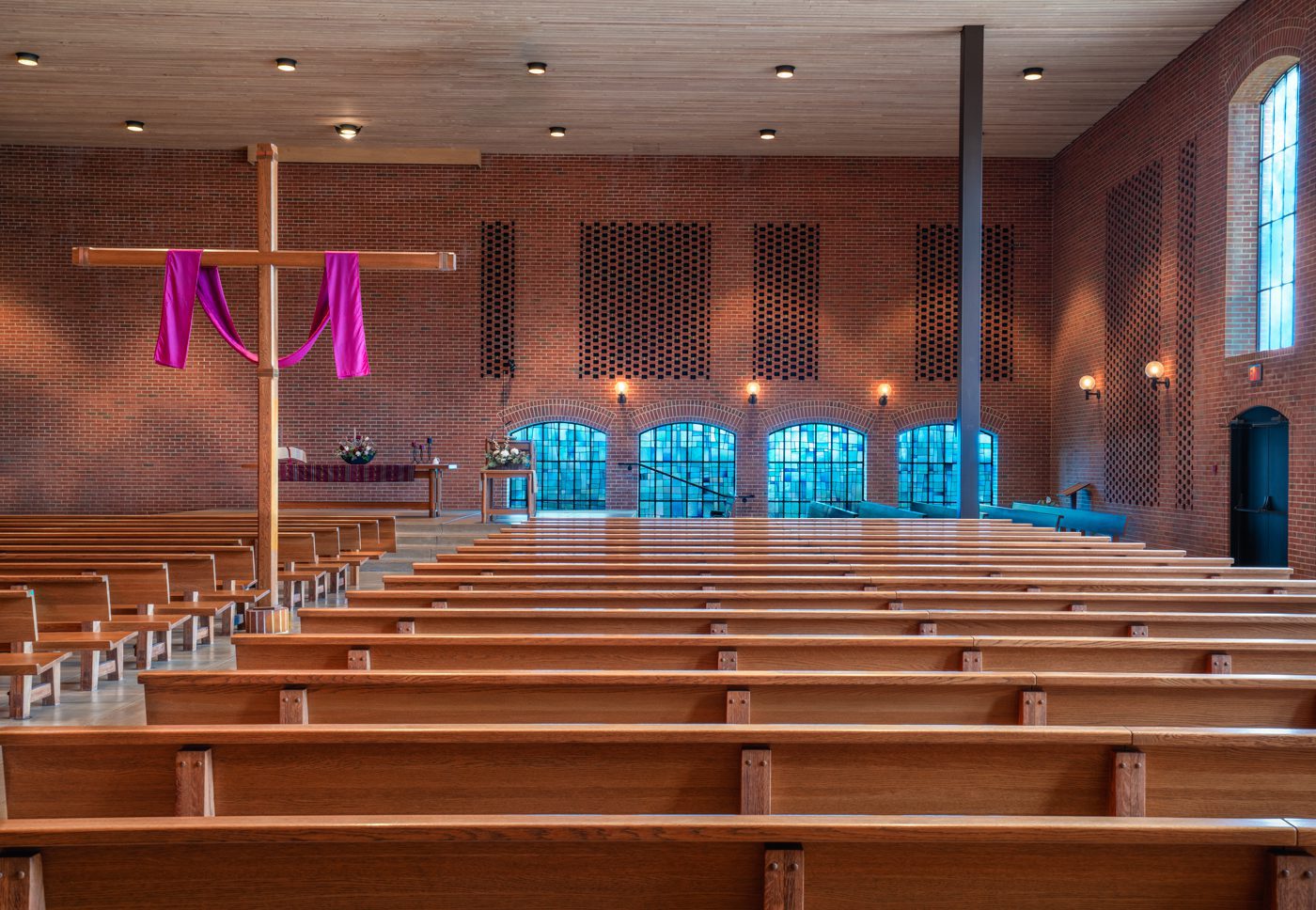
When you enter our worship space, you’ll notice the cross stands at the center of the room. That placement is intentional.
For us, the cross represents the heart of our faith — Jesus at the center of history, and at the center of our lives. It reminds us that God chose to enter fully into the world, not remain distant from it. Because of that, we believe we are called to be deeply engaged in our communities, bringing Christ’s love into everyday life.
The cross is not placed as a decoration at the front of the room, but among the gathered congregation. This reflects our Anabaptist heritage: following Jesus isn’t just about what he has done for us — it’s about how we live in response. We believe each of us is invited to take up the way of Christ in humility, courage, and love.
Discipleship — actively following Jesus together — is at the core of who we are as a church.
A Space That Reflects a Living Faith
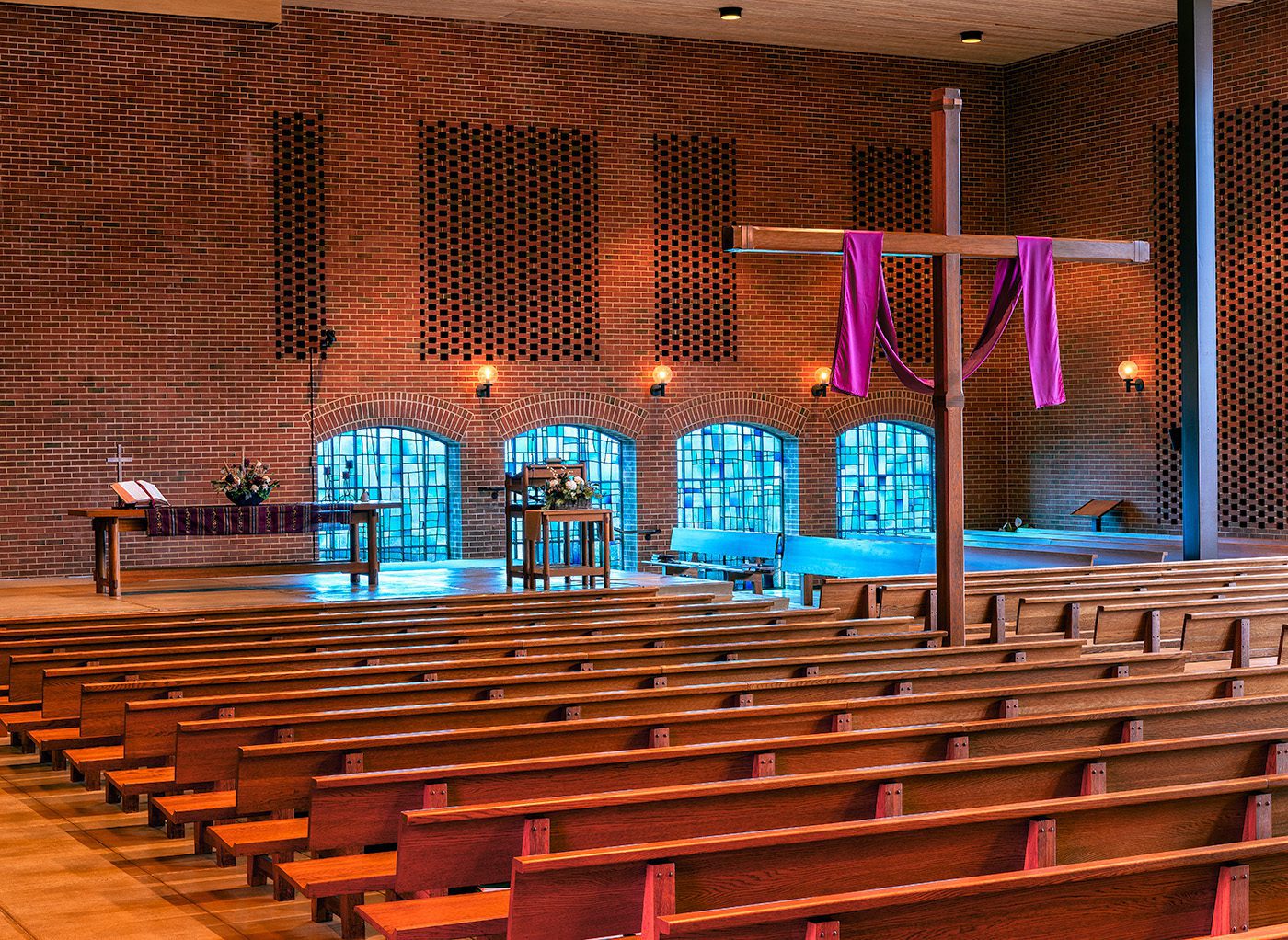
While the cross stands at the center of our worship space, the rest of the room is intentionally arranged off-center. That design choice reflects something important about our faith.
We believe Jesus Christ is the unchanging center of who we are. We don’t look for a new message or a different foundation — we hold to the same Christ, yesterday, today, and always.
At the same time, the world around us is constantly changing. New discoveries, new challenges, and new questions continue to shape our lives. Rather than making faith outdated, these changes invite us to understand Christ more deeply and apply his teachings in fresh ways.
For us, faith is not about simply repeating what previous generations have said. It’s about thoughtfully living out the way of Jesus in our own time. Each generation is called to wrestle with what it means to follow Christ here and now — and we see that as both a responsibility and a gift.
The Baptismal Font
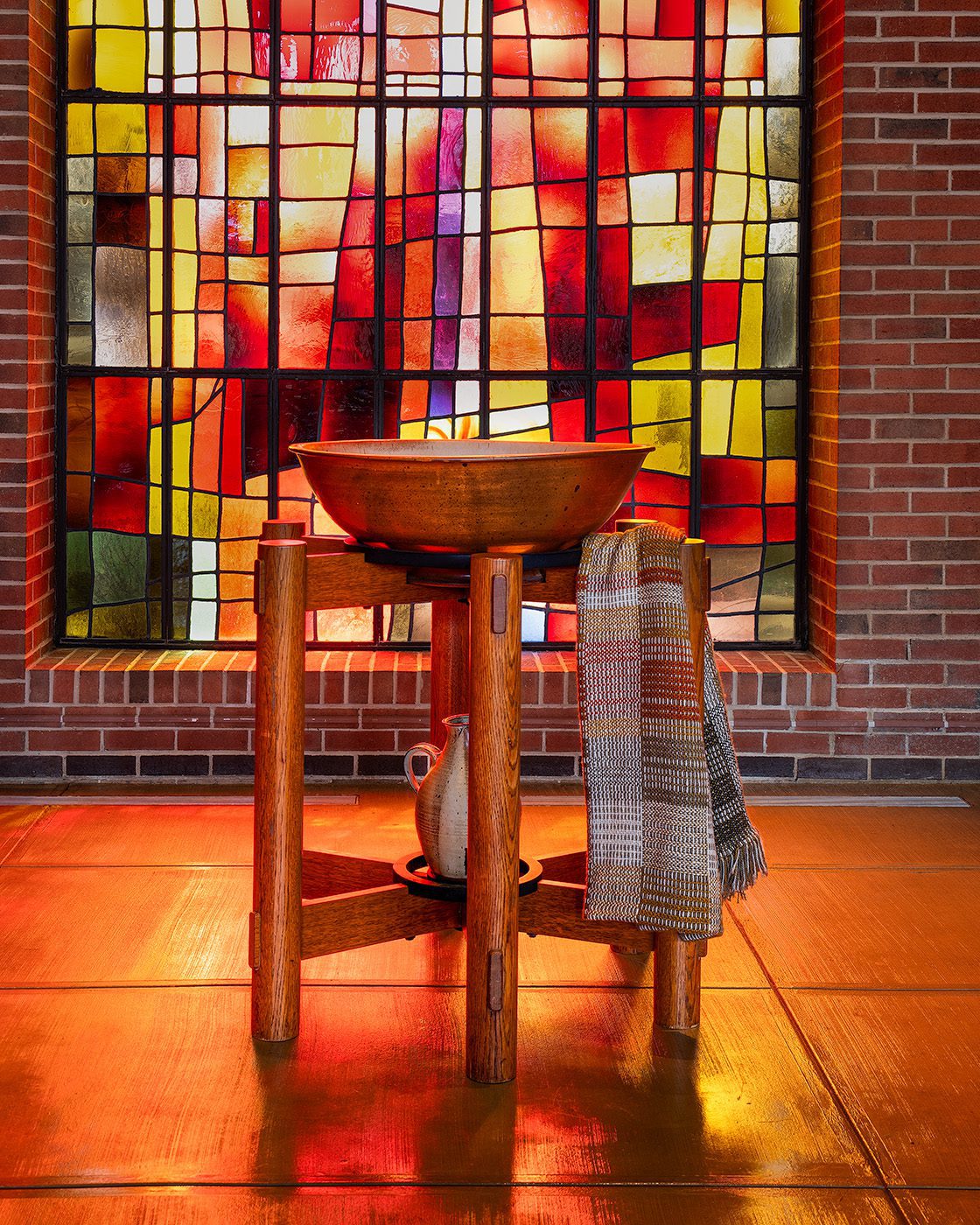
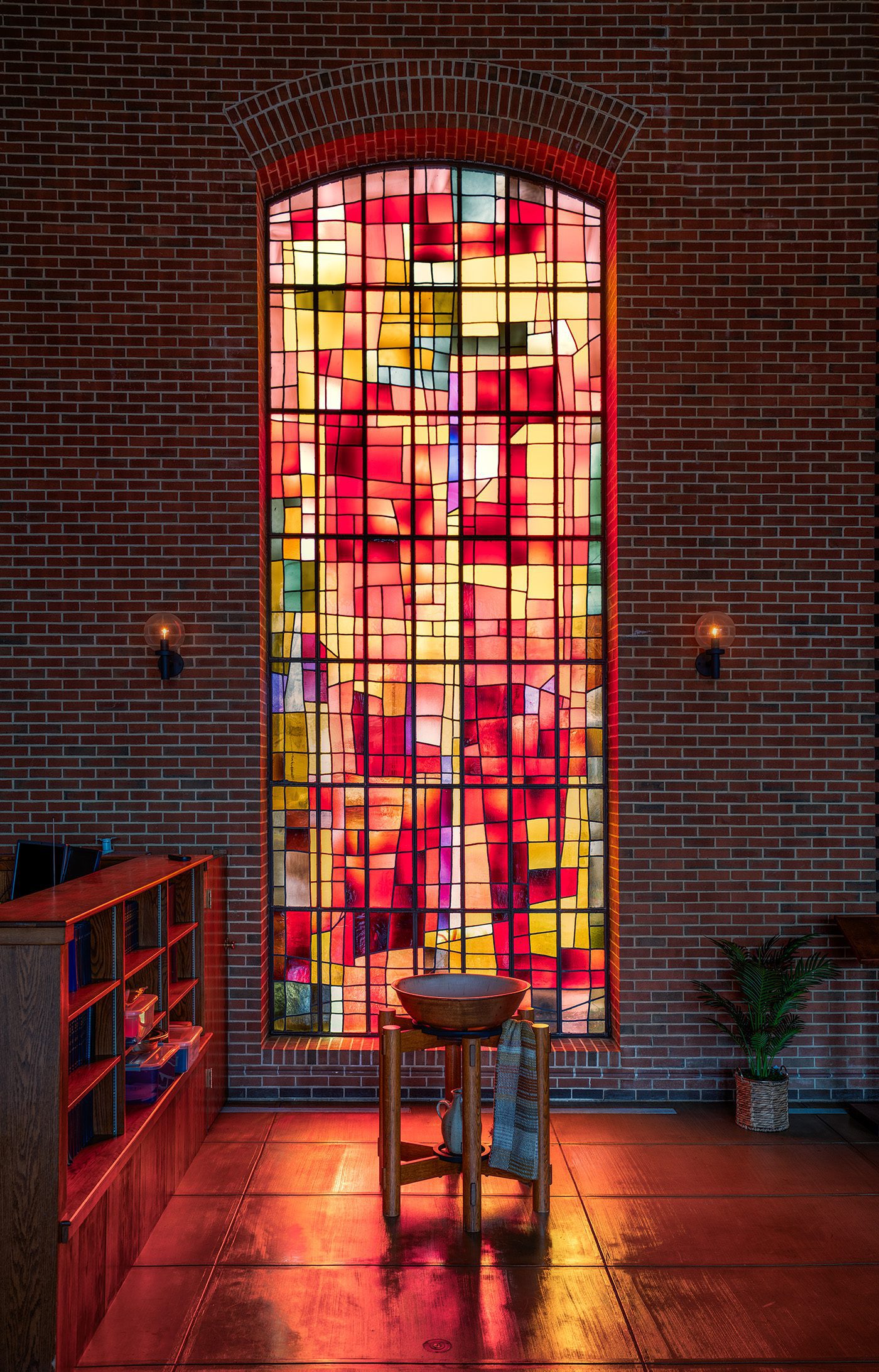
Near the entrance of our worship space, you’ll find the baptismal font placed in front of a red window. Made from clay and fired into stone, it reflects something simple and beautiful: ordinary material shaped and transformed for sacred purpose.
Baptism is a significant public step of faith — a way of saying we belong to Christ and to one another. In our Anabaptist tradition, it’s also a commitment to live faithfully, whatever that may bring.
You may notice a towel nearby. It’s there as a quiet reminder that baptism is not only about belief, but about action. To be baptized is to enter a life of service — following Jesus by serving others with humility and love.
The Baptismal Window
The window near the baptismal font tells a powerful story through color alone. You’ll notice shades of red — some deep and rich, others bright and fiery. Together, they reflect both the cost and the beauty of faithful discipleship and life in the Holy Spirit.
In the early days of the Anabaptist movement, believers faced intense persecution for practicing adult baptism. Many were imprisoned or even executed because they believed baptism should be a voluntary expression of faith. Their courage shaped who we are today.
The deep reds in the window remind us of the suffering endured by those early believers. The brighter reds point not only to fire, but also to the Holy Spirit — the presence and power of God that gives life to the church.
For us, baptism connects us to both of these realities: the call to faithful commitment and the joy of walking in the power of the resurrection with the Holy Spirit’s guidance.
The Blue Windows
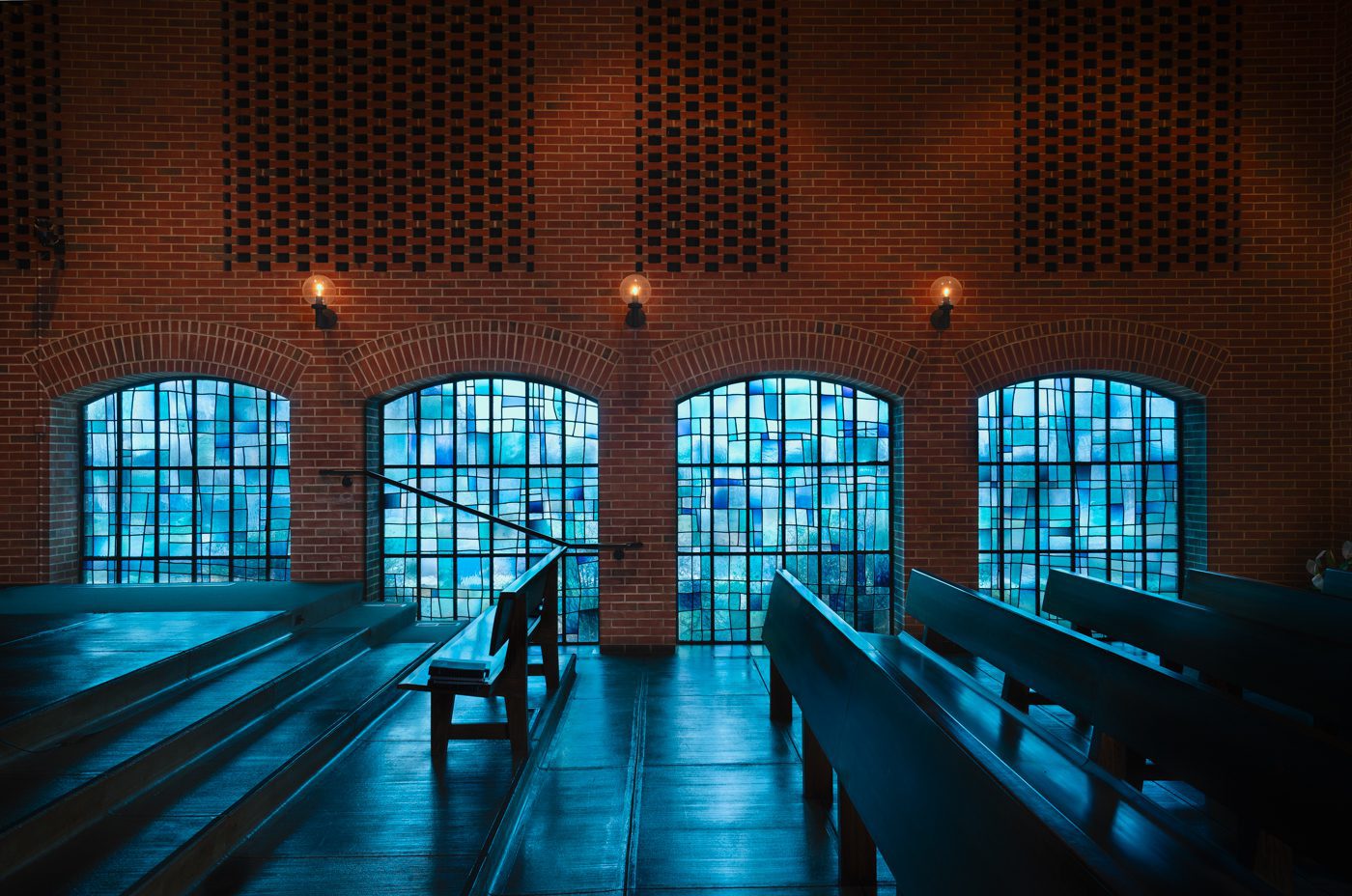
The blue windows in our sanctuary point to the future. “For now we see through a glass, darkly; but then face to face; now I know in part; but then I shall know fully, even as I am fully known.”
As Christians, we believe God is still at work and that history is moving toward God’s good and faithful purposes. That future hope keeps us grounded. It reminds us that no earthly power has the final word — God does.
This hope doesn’t pull us away from the world. Instead, it calls us to live responsibly and faithfully within it. We serve our neighbors, seek justice, and practice love today because we trust in the Kingdom that is still coming.
Together, the windows in our sanctuary tell this story. The baptismal window speaks of history: commitment, courage and the power of the Holy Spirit. The blue windows point to future hope. And the clear windows keep the present world always in view — reminding us that we are called to follow Christ here and now.
Solar Project
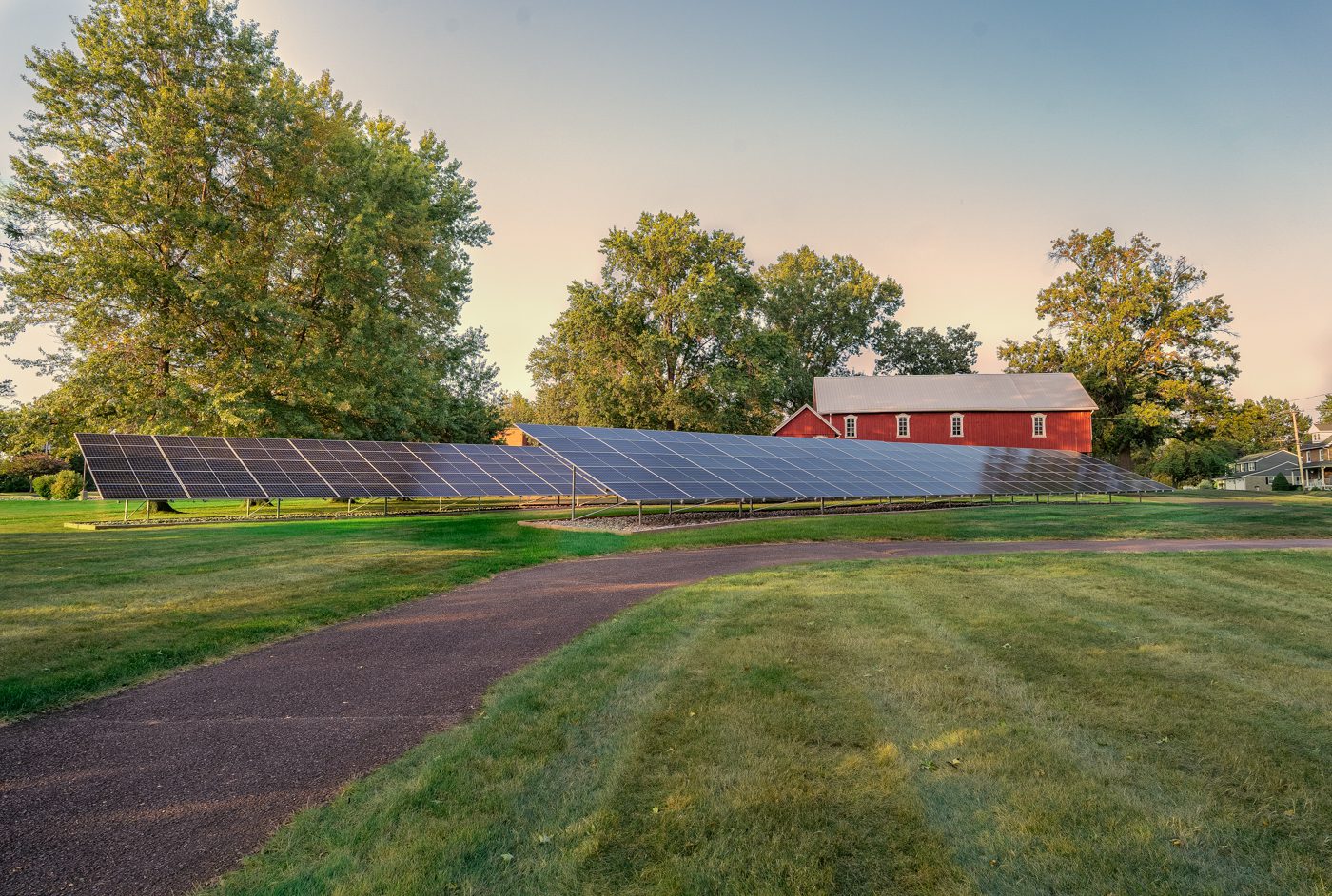
Zion Mennonite Church’s solar array was installed in 2024.